

This Mother’s Day, we pay homage to you, mom. We honor you, your resilience regardless of the trials, the setbacks, and the pushbacks. We honor your unwavering commitment in doing what Jesus called you to do, and we pray for miracles in your lives.
With that in mind, we also want to equip you with some practical emotional regulation tips for parents so you can continue to walk out your mission as effectively as possible.
One of the ways you can do this is by giving yourself permission to take a regulation break .
This is article 5 in our 13-part series, Intentional Parenting: Your Emotional Presence. Want to start the series from the beginning? Click here to read the first article now
Self-Regulating Behavior: The Adult Reset
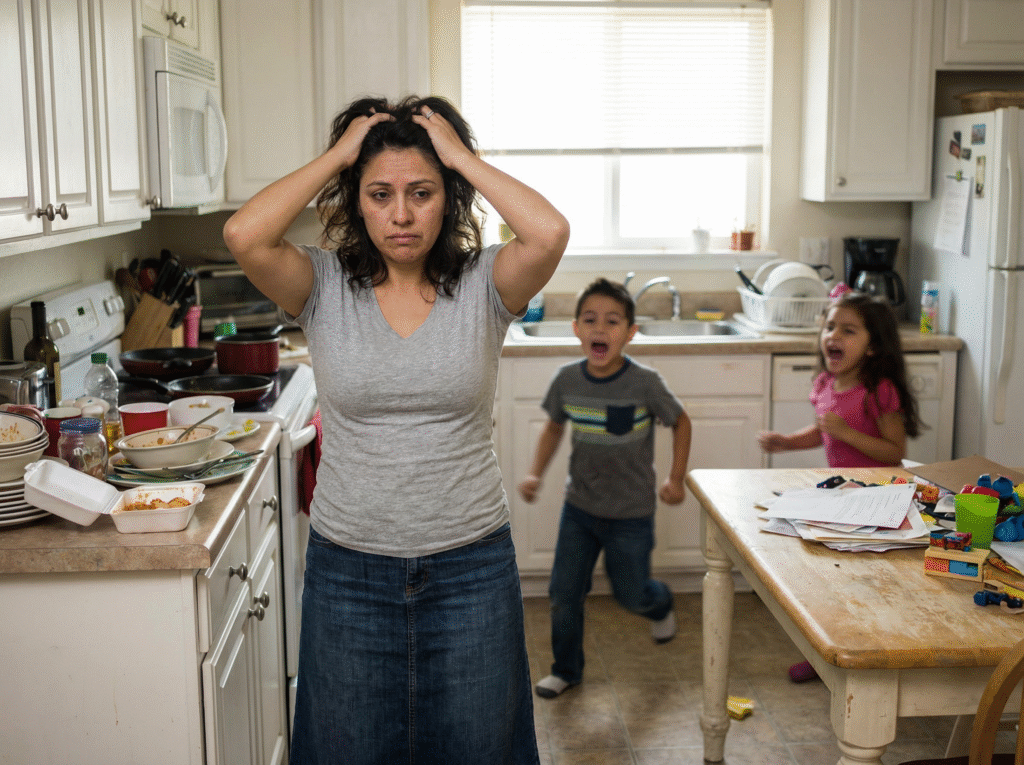
Your child is not the only one who sometimes needs support time regulating big emotions. You are also human with your own history, triggers and nervous system — and sometimes, you need a moment to pause, and care for yourself so you can respond to your child with love.
Essentially, taking an adult reset means an intentional pause when you can step away by yourself into another room and gather yourself emotionally after feeling overwhelmed or triggered.
It’s not a sign of failure, but emotional maturity. When you model healthy regulation, you teach your child how to do the same.
Adult Reset as an Emotional Regulation Strategy
If you find yourself being triggered by your child’s challenging behaviors, here are three ways to take an adult reset and practice healthy self-regulating systems at home.
1. Recognize the signs that you are becoming dysregulated.
Just like with our kids, emotional dysregulation can easily sneak up on us. Learning to recognize the warning signs helps you intervene before emotions escalate.
For example, you might notice tightness in your chest, rapid heartbeat, or shallow breathing. You might also experience an urge to yell, withdraw, or react impulsively.
When you notice these signs, assess where you are emotionally on a scale of 1 to 5, where 1 is a state of calm, and 5 is emotionally overwhelmed. Once you are at 3, it’s time to pause, invite the Lord into the moment, and begin regulating your body and mind.
2. Practice self-regulation.
When you’re feeling overwhelmed, help regulate your nervous stem by using one of these physical or sensory strategies below:
- Step into another room briefly
- Take 3–5 slow, deep breaths
- Drink a sip of water
- Stretch your muscles
- Listen to calming music
- Repeat Scripture like Psalm 23
- Model how their storm meets your calm.
3. Speak truth to your nervous system.
When we get stressed, we enter fight or flight mode. During that time when your emotions are heightened, the enemy may try to fill your head with lies and negative thoughts.
During these moments, Scripture helps anchor us in truth and reminds us where our peace comes from.
Choose one verse that you will use as your grounding verse that you will repeat during stressful moments — and always remember that God’s grace is sufficient. For example, Philippians 4:6-7 (NLT) is a favorite and goes like this:
Don’t worry about anything; instead, pray about everything. Tell God what you need and thank him for all he has done. Then you will experience God’s peace, which exceeds anything we can understand. His peace will guard your hearts and minds as you live in Christ Jesus.
KEY TAKEAWAY
Your child’s challenging behaviors can trigger you and activate your stress response. When you recognize signs of dysregulation and use a regulation technique to calm your own body and heart, you become an anchor of peace for your child rather than another source of chaos.
APPLICATION QUESTIONS
- What physical, emotional, or behavioral signs help me recognize when I am becoming dysregulated?
- What regulation techniques can I use to restore my inner peace and calm?
ACTIVITY
Learning to regulate can be fun for you and your child. A game like Stuffed! can show them healthy, productive ways to manage emotions.
Find this game and more in the Everyday Moments™ activity collection.
KEY VERSE
“Give all your worries and cares to God, for he cares about you.” ~1 Peter 5:7 (NLT)
PRAYER
God, please calm my spirit when my child’s behaviors challenge me. Allow me to be like You in those moments and lead with the fruit of the spirit: kindness, gentleness, patience and love. In Christ, amen.