

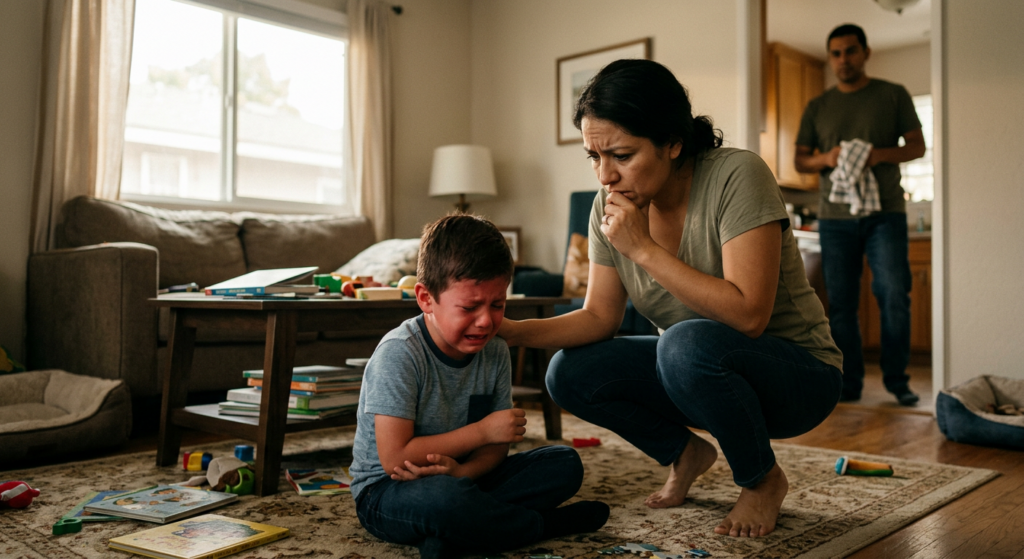

When you’re parenting a child who has experienced trauma, it can be difficult to tell which of their reactions are trauma responses and which are part of their typical development.
In the moments when your child has a big reaction to something that feels small to you, you may find yourself wondering, “Is this how it’s really supposed to be?” Likewise, you may have felt some “parent guilt” if you have ever overreacted to your child’s behaviors only to find out later that it was a traumatic response that they really had no control over.
There’s no condemnation in Christ Jesus (Romans 8:1), but we as emotionally responsible caregivers can learn how to distinguish our children’s trauma responses from developmentally age-appropriate behaviors. That way, we are more equipped to address our children in ways that are kind, loving, and ultimately beneficial for their growth and development.
This is the first article in our 8-part series entitled Compassionate Parenting. Keep reading more articles for guidance on differentiating trauma responses, developmental differences, and behavioral issues, helping you to raise your child in a loving, Christ-honoring home.
What are examples of trauma responses in children?
Here is a short list of trauma responses you may see in your child:
- Unpredictable/sudden meltdowns: Trauma reactions are often much bigger than the situation. Your child’s reactions may seem disproportionate to the event, like having a total meltdown if their toys are moved or plans change at the last minute.
- Regressing to an earlier stage of development: Trauma places your child’s brain in survival mode. Your child may act younger than their age because certain emotional skills are no longer accessible to them in this mode. For example, your eight-year-old child may throw a tantrum on the floor like a two-year-old toddler.
- Longer recovery time: If your child has a meltdown as a trauma response, they may tremble, freeze, hide, or even go silent after the event that triggered them. When this happens, it might take them hours or even days to “bounce back” or return to a calm state.
Developmentally Appropriate Behavior vs. Trauma Responses
Understanding the difference between neglect/abuse trauma responses in children vs. developmentally appropriate behaviors can help you respond to your child not with fear or frustration, but with the steady love of Christ.
Regardless of whether your child’s response is trauma-based or developmentally appropriate for defiance, here are five practical ways to manage your responses.
- Slow down before stepping in. Your calm helps regulate their fear. If you enter the situation on 10, you’ll only escalate their response.
- Lead with connection, not control. Instead of saying, “Stop that!” communicate, “I’m here” with your presence by using a gentle tone and non-confrontational body language.
- Offer compassion with boundaries. Communicate your boundaries with warmth; grace and truth can co-exist. You can calmly inform your child that you are willing to listen to them once they stop screaming.
- See the need beneath the behavior. Behaviors like fear can often look like anger or defiance. Ask your child open-ended questions to help them acknowledge what they’re truly feeling, too.
- Invite God into the moment. A whispered prayer can shift the atmosphere. Invite your child to pray with you for the Lord’s guidance — and don’t be afraid to break into prayer in the middle of your child’s meltdown. God will hear you, and so will your child.
As you follow this guidance, you can restore calmness to your home and help your child learn valuable self-regulation tools that will benefit them well into the future.
KEY TAKEAWAY
Trauma can hijack your child’s brain, making it difficult to understand if your child’s responses are developmentally appropriate. Learning the difference between the two can help you respond appropriately.
ACTIVITY
Bedtime can be especially difficult for children with trauma. A game like Light in the Darkness reminds them of God’s presence, even in the darkest moments.
Find this game and more in the Everyday Moments™ activity collection.
APPLICATION QUESTIONS
- How can I tell the difference between trauma and age-appropriate behaviors in my child?
- How can I lovingly respond when my child is experiencing a traumatic episode?
KEY VERSE
“I could have no greater joy than to hear that my children are following the truth.” ~ 3 John 1:4 (NLT)
PRAYER
Father, teach me to love with the steady, faithful love You show Your children every day. Heal the places in my child’s heart that fear has touched and heal the places in mine that feel stretched thin. In Jesus’ name, amen.