
As children, we often learn to recite the saying, “Sticks and stones may break my bones, but words will never hurt me!”
While a catchy rhyme, this sentence couldn’t be farther from the truth. Words do hurt, especially when we use them to place labels on children.
And even though these diagnoses are often well-intentioned, so many children interpret learning they have ADHD, autism or trauma as a new name or self-identifier.
A diagnosis can help us understand a child’s needs, but it can also leave a child feeling different or singled out — and as a parent, you might be left wondering if the diagnosis is even accurate and what you can do to help your child.
The tips in this article will help guide you through the process.
This is article #4 in an 8-part series entitled Compassionate Parenting. If you missed the first article, go back and read it here.
Understanding the Diagnostic and Statistical Manual
The Diagnostic and Statistical Manual of Mental Health Disorders (known as the DSM) is a book used by mental health professionals to provide a standard to help diagnose mental disorders in adults and children.
While a standard tool for diagnosing mental health disorders, the diagnosis your child receives from the DSM is not a verdict, a limitation or a measure of your child’s worth. It’s simply a description of how your child’s brain processes the world.
Does My Child Have ADHD, Autism or Trauma?
Attention deficit hyperactivity disorder (ADHD), autism spectrum disorder (ASD) or trauma (not a disorder, but a category in the DSM) can affect your child’s behavior, communication, and ability to regulate emotions.
However, they are not the same. Understanding the difference helps you respond with the right kind of support.
ADHD in Children
Our brains make dopamine, and children with ADHD have brains that make too much. If you are wondering, “Does my child have ADHD?”, here are some potential symptoms you may see and wish to discuss with a professional:
- Struggle with attention
- Act impulsively
- Have difficulty sitting still
- Hyperfocus on things they love
Autism in Children
Children with ASD often experience the world through a unique lens. They may range from nonverbal to high functioning (previously called Asperger’s Syndrome). Additionally, children with autism may:
- Struggle with social cues, such as personal space.
- Prefer routines and may become dysregulated with change and transitions.
- Become overwhelmed by sensory input and have frequent meltdowns.
- Communicate in unique ways.
- Focus almost obsessively on specific interests, like cars or letters.
Trauma in Children
Trauma changes how a child’s nervous system interprets the world. If you’re wondering, “Can trauma cause ADHD?,” the answer is no. However, there is a link between ASD and ADHD with trauma because trauma symptoms can either look like ADHD or ASD, or they can exacerbate the symptoms of these disorders.
A child who has experienced trauma may:
- React quickly to stress or perceived threats.
- Become overwhelmed easily.
- Shift between shutting down and having big emotions.
KEY TAKEAWAY
When your child is diagnosed with a disorder, it can create mixed feelings of relief and despair. However, it’s important to remember our child’s identity is rooted in Christ and not in any disorder.
ACTIVITY
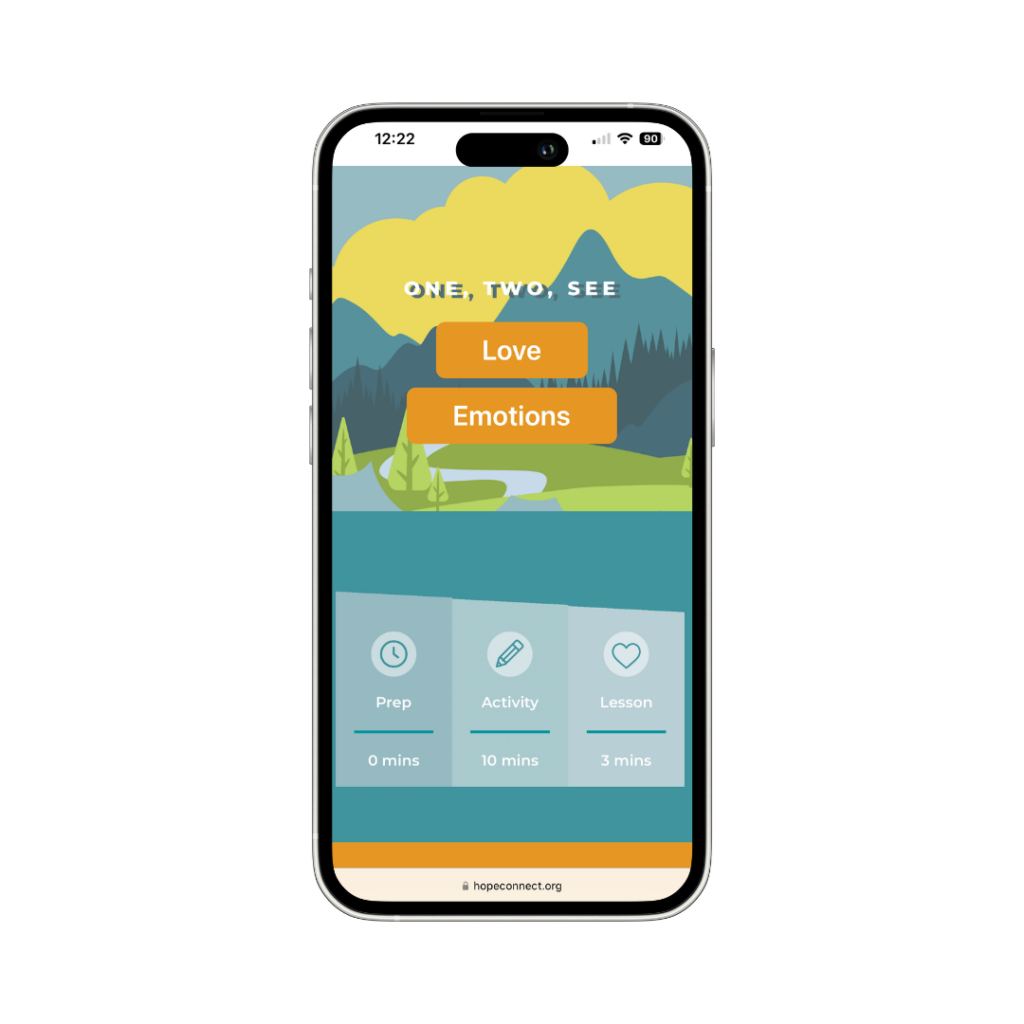
Your child was created by design and with purpose. Help your child remember that they are special in God’s eyes by playing a game like It Was Very Good. Find this game and more in the Everyday Moments™ activity collection.
APPLICATION QUESTIONS
- How can I tell the difference between Autism, ADHD or Trauma in my child?
- Is there a link between my child’s trauma and their ADHD or Autism?
KEY VERSE
“Each time he said, ‘My grace is all you need. My power works best in weakness.’ So now I am glad to boast about my weaknesses, so that the power of Christ can work through me.” ~ 2 Corinthians 12:9 (NLT)
PRAYER
Lord, thank You for the promise that Your grace is all I need and that Your power shows up strongest in the places where I feel weak. Help me to love my child in their weaknesses and strengths. In Jesus’ precious name, amen.