

As parents and caregivers of a child who has experienced trauma, we often have trouble communicating with our kids. It’s like playing a complex game of charades!
As you well know, children are born without the skills to manage emotions or navigate relationships. We don’t have to teach them how to say “mine!”; that part comes naturally. What doesn’t come naturally is sharing, cooperating, and handling frustration with calm. In fact, young children are developmentally wired to be impulsive, reactive, and easily dysregulated.
Often, when children are dysregulated, they have trouble identifying and naming their emotions. The good news, Mom, Dad or caregiver, is that you can help!
In the book Overcoming, written by renowned psychologists Nicole Gilbertson Wilke, Ph.D. and Amanda Hiles Howard, Ph.D., and published by CAFO, our strategic partner, emotional regulation is defined as “the ability to effectively manage and respond to strong emotions.”
In Part 7 of our Resilience Series, we share ways to help your children express and regulate their emotions.
How to Help Your Children Manage Their Emotions
Psychologist Albert Mehrabian said that communication is mostly non-verbal; especially when it comes to expressing feelings and emotions.
Non-verbal communication includes things like attitudes, body language, facial gestures, eye contact, posture, and even breathing.
Ideally, we want our children to move from acting out negative emotions (charades!), to managing their strong emotions in more effective ways.
Here are 3 ways to help your child learn to manage their emotions:
1. Help Them to Interpret Their World
Children typically look towards parents or caregivers for social cues on how to behave. Drs. Wilke and Howard call this “social referencing.”
For example, a child may fall and immediately look at you, mom and dad, to see how to respond. If you hover, gasp, or appear anxious, they will immediately start crying. Your child will “mirror” your emotions and attitudes. However, if you stay calm and respond with an “you’re okay – I’m right here”, they will believe that and respond accordingly.
Remember, children are born not knowing what’s right or wrong, safe or unsafe, and will look to you to help navigate their world and their emotions.
2. Help Them to Organize Their Emotions
Emotional Intelligence is the ability to not only regulate our own emotions, but to read and respond to the emotions of others, sometimes referred to as “attunement”.
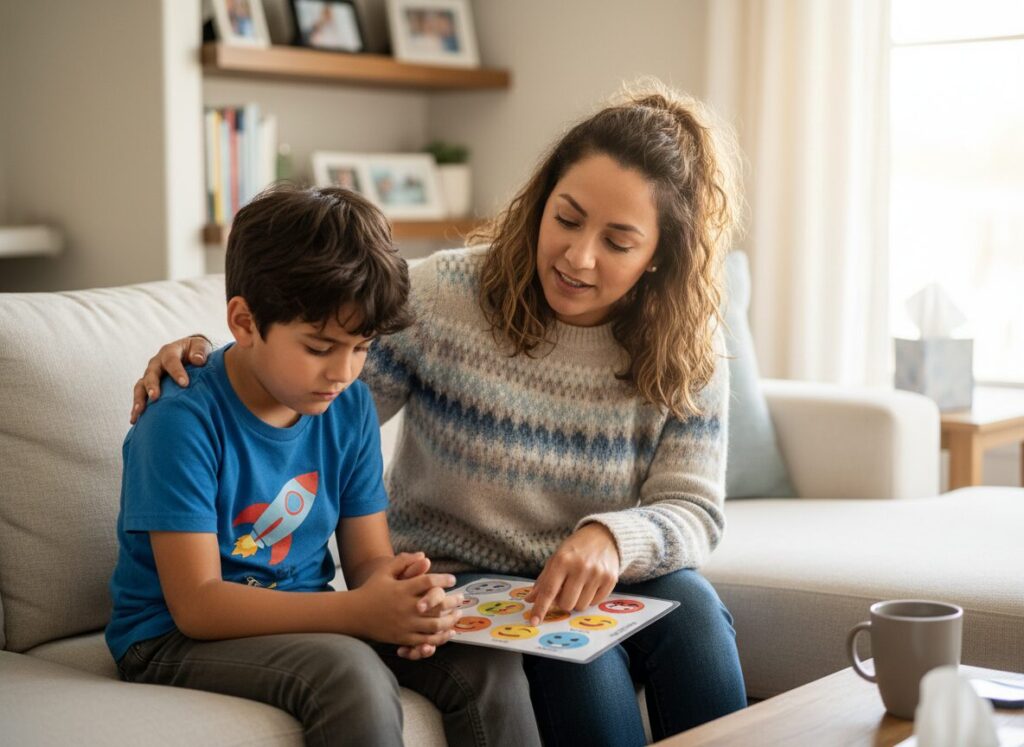
The experience of being seen, heard and validated are some of the most powerful gifts you can offer your children. When you can get on your child’s level, make eye contact, and reflect the feeling you are noticing in them (“you seem really sad today”) your child will feel seen, understood and supported.
Validation is another essential part of emotional development. This is when we give a child “permission” to feel what they are feeling. For example, “losing a friend is very sad; I would also feel sad if I lost a friend.”
We can help them recognize that a feeling itself is never wrong or bad, but can be displayed in ways that may be inappropriate.
3. Be Their Safety Net
A child who has experienced attachment wounds often carries an internal message that the world isn’t safe and that their needs may go unmet.
Because those wounds were created in the context of relationship, they can only be healed in a relationship with a caregiver who is nurturing, consistent and compassionate.
Your love, patience, nurturing and consistency are helping your child restore attachment bonds that were damaged. Knowing that they are loved through their mistakes and trials models God’s love for them and helps to rebuild trust and resilience.
KEY TAKEAWAY
Every emotion communicates a need. Teaching children to express their needs with words, as opposed to behaviors, gives parents and caregivers a better chance to respond in ways that bring healing and support.
APPLICATION QUESTIONS
- What needs are my child trying to get met through their behaviors?
- How can I help my child better communicate their needs to those around them?
ACTIVITY
Learning to express emotions can be challenging for young children. Emo-ME can help your child start to learn to identify their emotions while learning about some of the promises of God to help carry our burdens. Find this game and more now in the Everyday Moments™ activities collection.
KEY VERSE
“And ‘don’t sin by letting anger control you.’ Don’t let the sun go down while you are still angry…”
PRAYER
Heavenly Father, give me grace and patience to help my child through their difficult emotions, so that You may be glorified through them. In the precious name of Jesus, we pray.