
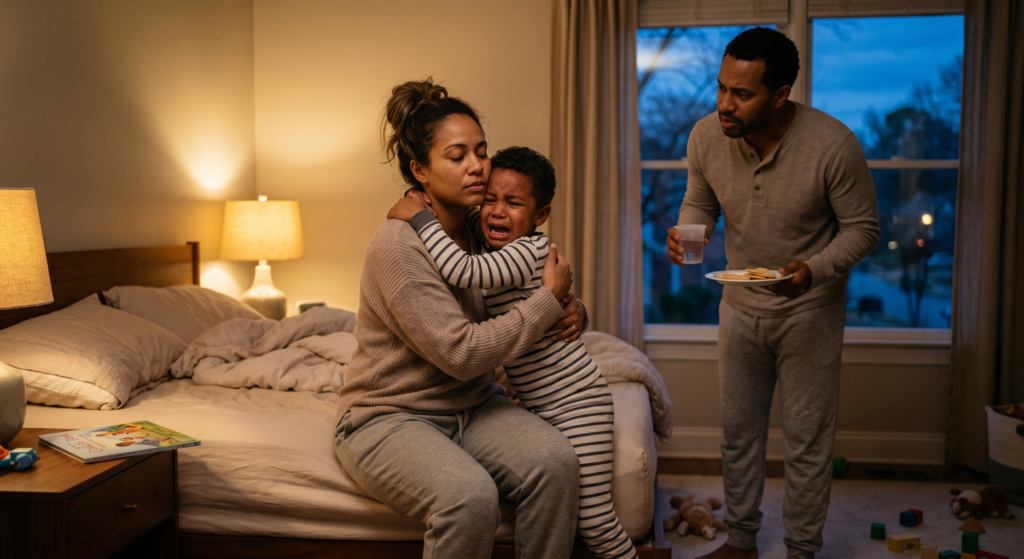

Does your child’s temper tantrum at bedtime scare even the monster under the bed?
As daytime turns to nighttime, do you find yourself bracing for the storm you know is coming: the tears, the screaming, the clinging, the sudden “I’m hungry”, “I’m thirsty,” or “I need to use the restroom again”?
The God of the universe doesn’t sleep or slumber (Psalms 121:4), but before you lose another night’s sleep wondering, “Why is my child so hysterical at bedtime?”, it’s important to first understand about sleep resistance in toddlers and uncover some night-specific
dysregulation strategies you can use to help curb the tantrums at bedtime.
Understanding Temper Tantrums at Bedtime
Temper tantrums typically occur at bedtime because bedtime isn’t just about
sleep for your child; bedtime is about separation, vulnerability and loss of control.
During the day, your child has noise, movement, distractions, siblings, and
play.
But at night, when everything slows down, and the world gets quiet, the feelings get
loud.
Children with trauma tend to experience the following:
- Fear of separation
- Fear of the dark
- Fear of being alone
- Fear of the unknown
- Fear of losing connection
Their nervous systems are on high alert, and sleep resistance, especially in toddlers,
is meant to communicate, “I don’t feel safe enough to rest.”
Why do kids make bedtime so hard?
Kids make bedtime hard because they experience a spike in cortisol, the stress hormone,
thanks to their perceived threat. Your 7-year old’s bedtime battle is due to fear-based separation anxiety and emotional overwhelm. This causes them to cry harder, become clingier, and develop hyperactivity, which can lead to a refusal to stay in bed.
Their nervous system is not misbehaving; it’s struggling to find safety, warmth, and
connection. Because they don’t feel this internally, they need to seek it from you.
For children with trauma, age doesn’t automatically bring emotional regulation.
This is why 7‑year‑old bedtime battles and even 8‑year‑olds who won’t go to bed are more common than parents realize.
So, while you might feel God’s promise to give his beloved rest (Psalm 127:2) does not apply to you right now, it’s important to understand that your child’s bedtime tantrum is not defiance, it’s dysregulation.
How to Stop Bedtime Temper Tantrums
If you’re torn between compassion and exhaustion and wondering how to stop (or at least
reduce) bedtime temper tantrums, here are three simple strategies to help calm your child’s bedtime temper tantrums and soothe their nighttime anxiety:
1. Your peaceful presence: Children regulate through connection, not correction. You might be wondering if you should simply ignore the bedtime tantrum; however, ignoring rarely helps a dysregulated child. Connection calms the brain, and presence builds safety.
Communicate your presence by:
- Sitting close or staying close until their body starts to calm
- Communicating softly, “I’m here”
- Moving slowly, so your child can mirror your movements
2. Offer a comfort object: For children with trauma, tangible comfort matters. Use an object that you only take out at night so that their brain makes the association that the object with sleep. You can also try lightly spraying the object with a familiar scent like lavender oil (good for sleep) or a light perfume that your child associates with you.
Some examples of comfort objects are:
- A stuffed animal.
- A blanket.
- A musical toy like a music box.
3. Predictable rhythms and routines: The traumatized brain thrives on routine to calm the chaos and build safety and trust. Trust is built through your consistent responses. Children fight bedtime less when they know what to expect.
Some examples of bedtime routines include:
- Bath, pajamas, story/Scripture and prayer.
- Dimming the lights or turning on a night light.
- Rubbing their back or offering a gentle touch of reassurance.
For children with trauma, nighttime can trigger old fears or memories that leave your
child feeling vulnerable. Your calm and reassuring presence can turn nighttime battles into opportunities for connection and healing.
KEY TAKEAWAY
Trauma can disrupt and dysregulate children’s brains, especially at bedtime. Simple and
consistent routines can help your child re-regulate at night.
ACTIVITY
Bedtime is a great time to offer comfort and reassurance by playing a game like Bedtime Band-Aids!
Find this game and more in the Everyday Moments™ activity collection.
APPLICATION QUESTIONS
- Why does my child rage at bedtime?
- What strategies can I use to help my child regulate at nighttime?
KEY VERSE
“In peace I will lie down and sleep, for you alone, O Lord, will keep me safe.” ~ Psalms 4:8 (NLT)
PRAYER
Lord, when the bedtime battles have worn me down, remind me that You, God, are my refuge and my steady place. Look over us as we sleep, cover us with your blessing. In Jesus’ name, amen.