

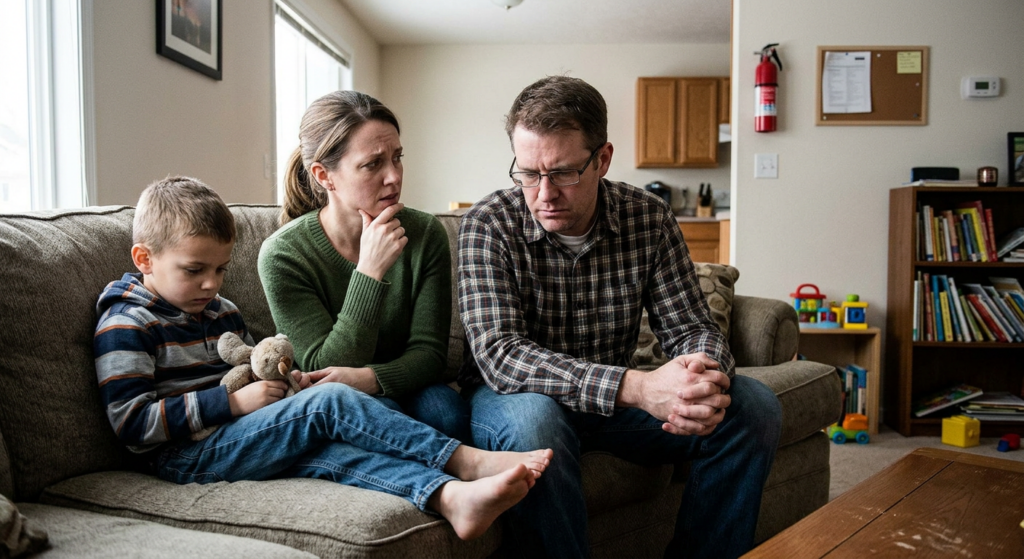

The day you have been anticipating as a foster parent is here — you have taken classes, received training and prepared your home with fire extinguishers for this moment.
After what feels like forever, you finally get the call you’ve been waiting for: your first foster placement!
A few days later you’re horrified; the child you’ve been anticipating doesn’t seem like the right fit for your family.
You feel blindsided, ashamed, overwhelmed, and afraid. Maybe you misheard God, misunderstood your calling or overestimated your capacity? You feel as if you’ve failed the child, the agency, your family, or God.
But no matter what you’re feeling in the moment, please remember this: You are not a failure. Our God who called you to foster is still in the story.
What is a Failed Foster Placement?
A “failed” foster placement or a foster care placement disruption, happens when a child must leave a foster home earlier than planned because the match is no longer safe or sustainable.
Contrary to what your emotions might be telling you, it does not mean you didn’t try hard enough to care for the child. It is not a reflection of your love, faith, or commitment to fostering. It simply means that the needs of the child no longer safely align with the needs of your home.
When a Child Placed in Your Home is Not Working Out
Sometimes, despite your best intentions, the child placed with your family may not work out. This can happen when the placement becomes unsafe, unmanageable, or emotionally overwhelming for the child or you.
Some of the reasons why this may happen are:
- The child’s trauma responses are more intense than expected after the initial “honeymoon” period.
- You have difficulty bonding with the foster child, perhaps due to a previously unrecognized mental or emotional issue.
- The child needs a higher level of care than you can provide.
- Safety concerns arise for other children in the home.
- The match was not appropriate; for example, you may prefer working with a child in a different age range.
- At the time of placing, the agency lacked sufficient information to place the child in the proper home.
Disrupting a Foster Care Placement
Making the decision to disrupt a foster placement can feel like you are “giving up” on a foster child. It is one of the most painful decisions you will make as a caregiver. Here are some practical next steps:
- Invite the Holy Spirit to help you spiritually discern the situation. Recognize when staying is causing more harm than good to your foster child, the other individuals in your household and you.
- Reach out to the child’s case team at the first sign of stress. Their primary goal is to help stabilize any placement to help it succeed for both the child’s sake and for yours. There might be resources or services that can be put in place that you don’t know about that can help tremendously and prevent heading toward a placement breakdown.
- Before making any final decisions, meet again with your child’s case team. Call your agency, caseworker, or licensing specialist, and honestly describe what is happening. Together, you can decide on a dignified course of action.
If you and your support team ultimately decide the best course of action is to disrupt the placement of the child with your family, you will be required to put in a 45-day notice (or whatever time frame is appropriate in your state) to your agency. This time is required so that the agency can find the best possible home for the child. They will also continue to put other services in place to stabilize the situation to aid you while the child is still in the home, and to help set up the next family caring for the child for success.
Preparing Your Child
If the child who joined your family must transition, you can help them leave feeling loved instead of rejected by:
- Preparing the child with simple, developmentally appropriate, non‑shaming language.
- Sending their belongings neatly packed, including comfort items, photos, or notes.
- Blessing the child with prayer. Help your child replace fear-driven responses with Christ-centered hope and resilience through praying His Word together.
- Cooperating with the new placement, either foster parents or family caregivers.
God is still writing redemption into both your and the child’s story.
KEY TAKEAWAY
When a child placed in your home must transition out, it can make you feel like you failed as a parent. Communication, steadfastness, and prayer will help you work through your guilt and transition your foster child to a more appropriate placement.
ACTIVITY
Remind your child (and yourself) that God promises to carry our burdens by playing a game like Emo-Me. Find this game and more in the Everyday Moments™ activity collection.
APPLICATION QUESTIONS
- How and when do I make the decision to disrupt a child placed in my home?
- How can I best help my child transition to their new home?
KEY VERSE
“For I am about to do something new. See, I have already begun! Do you not see it? I will make a pathway through the wilderness. I will create rivers in the dry wasteland.” ~ Isaiah 43:19 (NLT)
PRAYER
Father, I come to you with a heavy heart, and I ask you to meet me in confusion, disappointment, and guilt. Wrap your arms around me and this child and remind me that Your grace is enough and that Your power works best in weakness. In Jesus’ name, amen.